
Inflight catering does not rush. For a long time the industry stayed with the methods it already trusted, even where that meant more manual work, because a kitchen that misses an aircraft has a worse day than a kitchen running an old process. That caution was rational. It is also being overtaken.
Automation buys efficiency and pays for it in flexibility. A machine that performs one step quickly and evenly performs that one step. Everything else costs.
So the useful question is a good deal narrower than the one a vendor presentation answers. How stable is the process at the point where the machine would actually sit?
Why the demos work and the installations do not
Food is soft and never identical
A gripper that handles a rigid part all day meets a product whose shape, weight and give change from batch to batch. In a demonstration the samples are chosen. In a production run they are not.
The environment is wet
Production areas are cleaned with water and chemicals. Equipment that runs for years in a dry hall lives a shorter life here, and the failures are rarely dramatic. Seals go, sensors drift, and the line gets slower long before anyone calls it a fault.
Menus move, and they move per airline
Every change that touches an automated step turns into a reprogramming job. That cost never shows up in the demonstration, because the demonstration only ever runs one menu.
We are not arguing against automation. We are arguing against one answer for every step, which happens to be the only thing a single vendor is in a position to offer.
Where automation usually earns its place
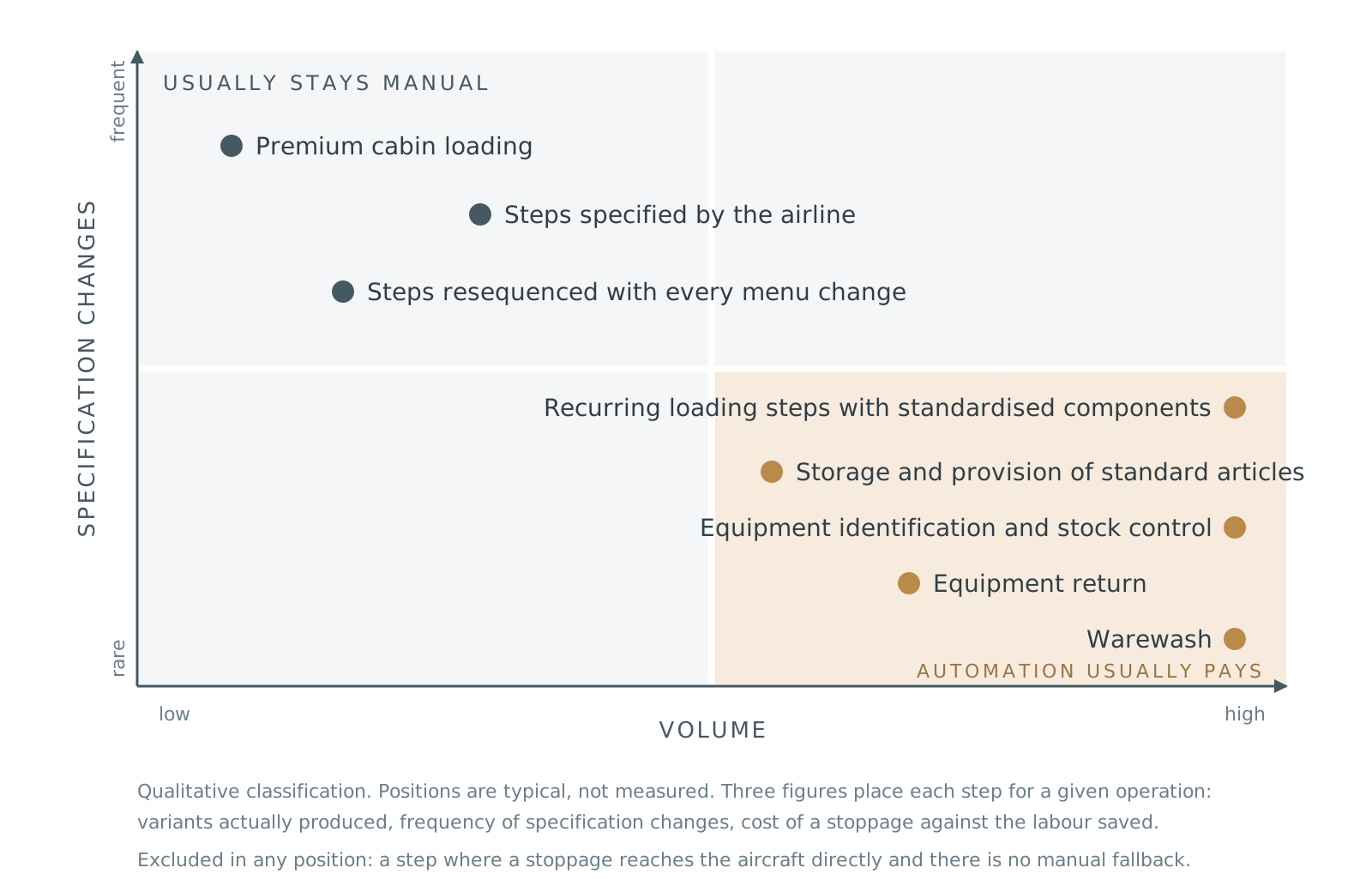
The steps that carry automation look alike. High volume, a specification that stays put, not many variants.
- ›Warewash and equipment return. Nobody rewrites the wash cycle when the menu changes.
- ›Equipment identification and stock control
- ›Storage and provision of standard articles
- ›Recurring loading steps, but only where the components are standardised and stay standardised
Where it usually does not
The opposite case is just as easy to spot, once you look at variance instead of volume.
- ›Premium cabin loading, where the variant count is high and the volume is not
- ›Any step whose specification is set by the airline rather than by you
- ›Steps that get re-sequenced with every menu change
- ›Anywhere a stoppage reaches the aircraft directly and there is no manual fallback
A demo cannot answer this
Which list a step belongs in is a measurement, not an opinion. Three figures settle it, and most operations we work with hold one or two of them at best:
- ›how many variants actually get produced, rather than how many appear on the menu
- ›how often the specification of that step changes
- ›what a stoppage costs at that point, set against the effort the machine saves
Where those are missing, the decision ends up resting on the strength of a presentation. The fix is unglamorous. Before you compare vendors, build a base that records what the operation actually does. We go into that in data strategy for airline catering operations.
How we approach it
We come at this from the plant side. DSC-Consult plans inflight catering facilities and the data that runs them, so we know where the trolley physically goes and what it should be recording on the way. That is what lets us answer the automation question per step instead of per system.
DSC-Consult does not sell equipment and does not develop or operate software. We define the software strategy, run the vendor selection together with the client and implement the selected third-party system as part of the overall project delivery.
The practical consequence is that we have nothing to sell you at the end of the analysis, which is the only reason the answer is allowed to be no.
Frequently asked questions
Does automation always reduce cost in a flight kitchen?
No. It buys efficiency and pays for it in flexibility. Where a step is stable and repetitive that is a good trade. Where the step moves with the menu or with the airline, the saving on labour goes back out again through reprogramming, changeover and the cost of standing still.
Why do robotics demonstrations often not translate into catering operations?
A demonstration runs a chosen product in a dry room against one specification. A flight kitchen handles a soft product that varies batch to batch, cleans with water, and changes its specification whenever a menu or an airline requirement changes. None of that is in the demonstration. All of it is in the operation.
Which steps in airline catering are the safest candidates for automation?
Warewash and equipment return are the clearest case, because the process does not change when the menu does. Equipment identification, stock control and the provision of standard articles work for the same reason. Loading steps can qualify, but only where the components are genuinely standardised.
What do we need to know before deciding on an automation investment?
Three figures, measured rather than estimated. The number of variants actually produced, how often the specification of the step changes, and what a stoppage there costs against the effort saved. Most operations hold one or two of them, which is why the work usually starts with the data rather than with the shortlist.
Does DSC-Consult sell or build automation systems?
DSC-Consult does not sell equipment and does not develop or operate software. We define the software strategy, run the vendor selection together with the client and implement the selected third-party system as part of the overall project delivery.
Who you would be working with
"We have found DSC-Consult to be a highly experienced & supportive partner, with a deep understanding of the inflight catering & food service industries."

Responsible for digitalisation and data strategy, and external Advisor for Digital Transformation and Change Management at Axzoom.
jb [at] dsc-consult [dot] com


ISO 9001 certified quality management
Discuss an automation decision
Dr. Julius Bornschein, Managing Director. Direct contact: jb [at] dsc-consult [dot] com